Showing posts with label off-grid. Show all posts

Day 10522


Last weekend's tropical storm knocked out power in the city for a few days. Pictured above is about ten trees blown over, including two large white pines and an oak, which flipped up a bridge on the nearby hiking trail. 


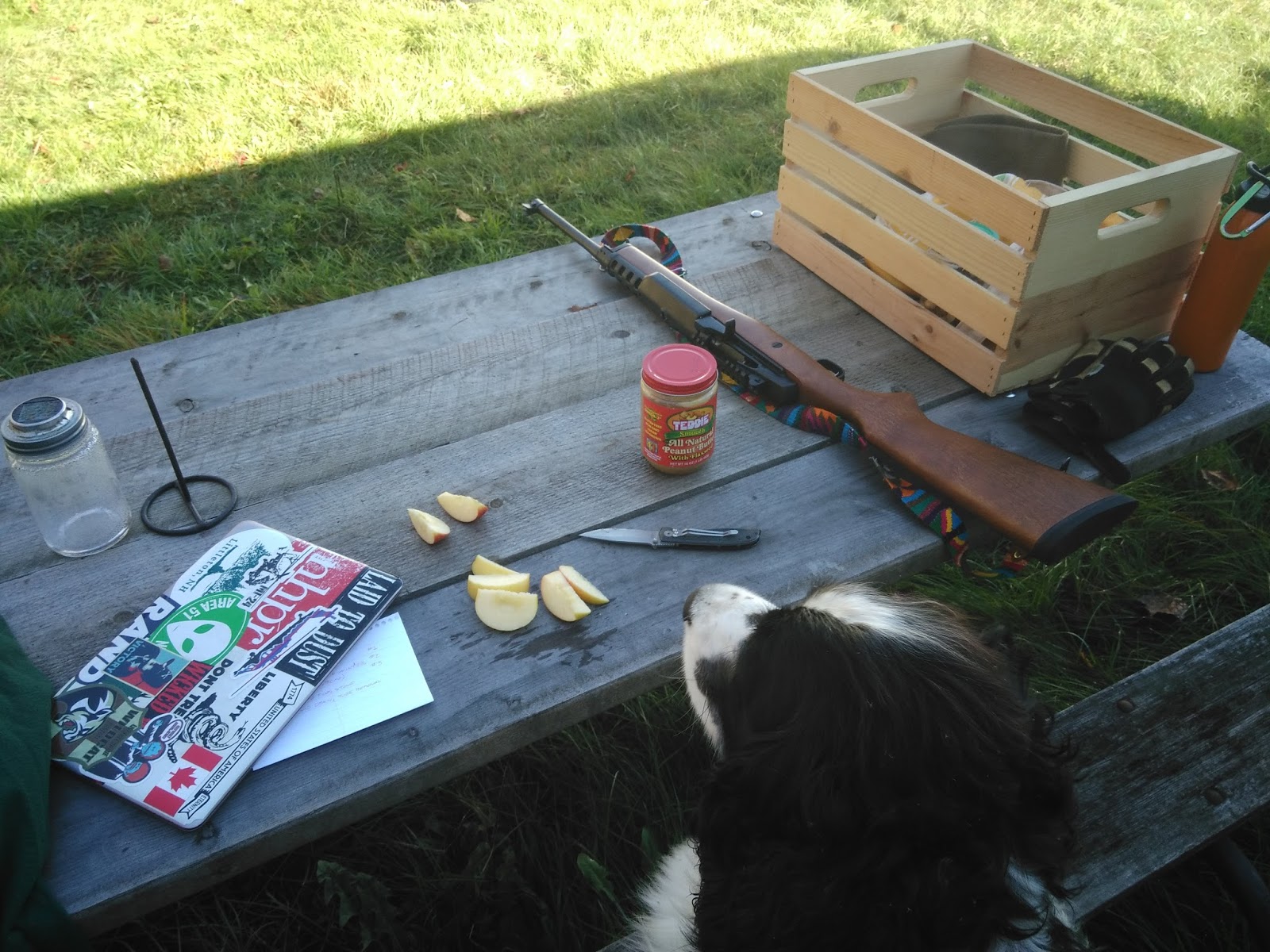
As mentioned before, I was missing the bus's off-grid conveniences during this grid-tied power outage. In the barn I have propane heat, but I couldn't cook without electricity. Thankfully, my truck bed doubles as a field kitchen. Toast & eggs, or tea? Anyone?


The North country had received it's first dusting of snow on day 10520. I didn't see anything taken out by the gusty wind, but the bus had a few leaks inside from all the rain hitting the hatches and the chimney. I think it will survive another winter!


It was still below freezing, so first things first, I cleaned out the woodstove in order to lay down some firebrick. I must have measured wrong, because I could still use a few bricks! These bricks will absorb heat from the fire, slowly, and radiate it out the same way. The bare steel of the stove radiates very quickly.  Hopefully this will make for longer burns overnight.


Zeke supervised the unloading of the 444's new rototiller.  That was heavy... I didn't drag it far.


While the bus warmed up, Zeke and I took a walk out back. 

I know from some research, and the stone walls and barbed wire, that the plot used to be a dairy pasture. I also know that there is an abandoned, grown-in road at the northern edge of the property. Since there were no structures or foundations on the southern edge, I had a hunch that one might lie along the old road...


As soon as I crossed the old stone wall of my land, onto the abandoned road, I spotted two wicked looking old apple trees. People used to plant fruit trees near their homes, and sure enough, a stone foundation lay next to the apple trees. The last time I was out here the woods was thick with green vegetation; I was probably standing right next to it and didn't even know!


I imagine there's more of these foundations up and down the road.


Heading back, Zeke found what appears to be a deer's leg bone. He was very fond of his discovery. 


The winterization of the bus is about done; it should weather the next character-building season alright. The firewood I have on hand is all still a little wet, but nothing will fix that except time in the sun. I haven't even started the dump kit install on the F350, so I'm still without a plow truck for the winter... unless I throw the chains on the 580's tires, and run the generator for a few hours to warm it up! More likely, once the snow gets deep, I'll be hiking in with snow-shoes. With luck, the next few visits up north will be to camp out, cook food, and hike the area.

I'm going to go out on a limb here and say that I have colonized the land in the housebus, and strike that from the to-do list. If the bus can weather another New England winter at the new site, and I'm at the point where I could just go up, start a fire, cook lunch and read... I think it's fair to say I've established myself up North. My next big focus will be picking a site to build, gathering materials, creating building plans, and getting the paperwork in order to start construction in the spring.


Day 10502

Like the 18th century colonials before us, I am typing this blog post using wifi from my cell phone's hotspot, and light from a candle to see the keyboard, as the power is out down here in the City. A warm, windy front is moving through, bringing some needed rain. It also brought down a power line.

I was in the midst of cooking dinner when the lights flicked off, so I was a little annoyed (crunchy rice soup, anyone?) but I improvised, adapted, and overcame, and cooked most of my food on the grill outside with the waning twilight. Holding the flashlight to see if my Vermont-raised hipster chicken cooked through, I was wishing I had the bus and all of it's amenities. I could have cooked my rice and potatoes over the woodstove. I would have had bright lights for days, even with cloud cover, running off the batteries. Cell phones and computers could be charged with converted or inverted DC power. My resilient mobile homestead is designed to operate on it's own, and this is the first outage where I haven't had the ability to use it.

Not having the bus has really made me think about how dependent we all are on "the grid." One tree goes down across an open, exposed power line in a wind storm, and at least dozens, maybe hundreds, maybe thousands of people are without light, and unable to cook their dinner. So the lights are out; now what? Many went into town for food. Some cranked over a loud, gas-powered generator to get their house running again (or not, because it has a dead battery and watery gasoline.) Some settle in and spend time with their family, eating cold leftovers, rooms illuminated with candles, the one flashlight that wasn't dead, and iPad screens. My family went with the latter.

A friend of mine in school grew up in an off-grid house. When the power went out in her town, she had no idea! She'd come into school the next day wondering why everyone was complaining about not having a hot shower, or not having internet to finish their homework. At her house, there was no change! They weathered the power outage just fine, because they weren't connected to it. They weren't reliant on that power coming in off the pole. I didn't realize that an off-grid house wouldn't lose power in a storm until an embarrassingly late age.

How much of what we pay in our electric bill goes to supporting the infrastructure? How resilient is our community, how vulnerable are we, when a single tree can disrupt the evenings of hundreds of people? Now imagine with me, that instead of our grid tied system, with thousands of power poles and thousands of miles of electrical wire, "gracefully" connecting all of our homes to a series of single-point failures... we have a community of off-grid homes. For electricity, these homes have solar panels up on the roof, a battery bank in the garage. A wood stove may provide the heat for the home, or maybe a geothermal system. Let's go the extra mile and assume they have a small garden, and a few weeks of food stored... is there anything that this house, and that family, can't endure from Mother Nature's wrath in New England? How much stronger is the community, when a tree going down across the road doesn't take out power to hundreds of homes? How much stronger would our nation be if more people lived like this?

Imagine all the people, living with no electric bill... and no power outages.

Meanwhile, back in cold, harsh, oil-burning reality, I'm continuing work on tractors. I went up North on Day 10502 to finish "winterizing" the bus. I closed up all the windows, which had been letting it breath in the heat, and laid down some fresh sand in between the bricks under the woodstove.


I cranked up the woodstove for some heat. When I got up North it was early, and still in the 40's. The bus warms up quick once the fire is going; it also cools down quick once it goes out! I have firebrick added to my to-do list; I'd like to put a layer in the firebox to take some of the heat, and dissipate it gradually. Otherwise, this thin sheetmetal stove takes all the heat it makes in the burn and radiates out from the hot steel, or sends the hot exhaust smoke up the chimney. I can slow down the burn with the damper and the air inlet... but the restricted airflow just makes for a dirty burn, which could load my chimney with creosote if I don't burn good dry wood. Can you tell I'm in the middle of a book about masonry woodstoves? Learning is happening.


I wanted to fix the cracked driveline on the 444 tractor, so I needed to lift it up to get under it. I also realized the front tires were flat. My dad had borrowed my farm-jack... what to do?


A solution presents itself. With the tractor elevated, and the front axle properly shored with firewood (what can't be done with a backhoe, a chain, and firewood?) I began disconnecting the hydraulic lines. My intent was to replace the 444's forward and reverse hydraulic lines, from the control valve to the drive motor, with the lines and reducer from the 442 I parted out. The reducer on this machine ought to keep it from "running away" when it's in gear going down a hill, which is a "nice feature."


One of the B-nuts was rusted tight, and the crack opened up and severed the line as I tried to loosen it.


With the line removed, I needed to pull the two 90 degree fittings off the start motor so that I could install the reducer. I found that I couldn't remove the upper 90 degree fitting, because it wouldn't clear the tractor's frame. Hmmm... I don't think I'll be doing much more on this machine today. I'll have to take the axle off, which requires major disassembly off the whole backside of the tractor, in order to do what I wanted. I elected to do a quick fix, and get a braided hydraulic line made up. This way I can use the machine until I have some time to do the major surgery, though it isn't as resilient (or as expensive and hard to find!) as a new steel line.


So the tractor will remain on firewood jackstands until I can get back up with a new line. Good thing the neighbors can't see... how embarassing.

Back down in the city, Gavin and Mark came over to try to start Gavin's Massey Ferguson. We had replaced the battery, spark plugs, spark plug leads, checked the distributor, cleaned the carburetor, then drained the tank and put in a few cups of fresh gasoline. Online we found the cylinder firing order of the 2.5L Perkins motor (1-2-3) and we looked at the rotation of the distributor to see which order the plugs fired in. We didn't know one thing; where the cylinders were in the motor, and which spark plug lead should go where. But hey, we knew there was only three possible combinations, and it wouldn't run on two of them, so we labeled the plugs A, B and C, and started cranking. The carburetor was dripping gasoline from a stuck float and needle valve; I'll have to pull that back off and tweak it. Jokingly, we set a fire extinguisher out on the floor next to us, and made a plan for who would fight the fire, who would jump in the truck, and who would connect the chain to pull the thing out and let it burn in the yard, if it came to that.

Spraying ether into the open port of the carburetor, we got it going on 1-2-3/B-A-C, but it wouldn't stay running. We tried the other combinations. On C-B-A, we got a big coughing backfire out of the carburetor, which ignited the fuel vapors from the leak. The tractor now had a small fire burning around the dripping carburetor. Gavin stopped cranking.

"It'll go out" said Mark.

A few seconds go by.

"It's not going out" said Mark.

I pulled the pin on the fire extinguisher, and hit the base with a two-second burst of powder.


Hero of the day; ABC fire extinguisher.

Coughing through a cloud of monoammonium phosphate, we went outside and decided to call it a night. We elected to get the carburetor fixed, and go back to the B-A-C firing order.


Day 10492

Zeke and I spent a much-needed cool morning up at the bus. The fall foliage is past peak on the land, and the wind has taken most of the leaves from the trees on the edge of the pastures. The goldenrod, which was bright yellow at last visit, is now brown and dropping seeds.

Hopping out of the truck after a foggy drive North, we opened up the bus. I grabbed my water bottle and rifle (I haven't forgotten about that bear!) and we set off through the woods. Most all the leaves are down, really opening up the space. We checked a few spots to see if they were still wet, or if they're just seasonally damp spots. The stream was down a bit. Not much wildlife, though we did see a bald eagle soaring above us. 


Made a new firewood pile at the back door, where these oak limbs can catch some sun. I'd like to get some clear plastic sheet to keep the water off of the firewood stacks.


Snack time.

Today's tasks mostly revolved around winter and angles. The first project was the solar panels. I climbed up on the bus roof with a wrench, a small level, and a speed square to change the angles. Two bolts hold the mount to the perforated angled rail; I removed these, brought the panels up to a higher angle... and realized I didn't know what angle I was setting them too!


I whipped out the phone, searched for this blog, found the post where I talked about the panels, and found my answer; line of latitude plus axial tilt of the Earth. So I needed these panels to be ~68 degrees from horizontal. Putting them five holes back from the furthest "up" position gave me 67 degrees. I threw the bolts back in, and snugged the nuts down. With this adjustment, the panels will receive more sunlight over the next six months as the sun travels on a lower arc around the southern horizon. Some call this winter.

Next I took a 4x4 post, a square, and my long level, and started measuring the ground. I want to find the average slope of the land, so that over the winter I can work out a barn design to build to. I set the 4x4 on the ground, with the level on top, and raised the downslope end of the post until it was level. I measured the elevation with the square. After taking half a dozen samples, I averaged them together, and found that the field around the bus drops off about 5.5' vertically, every 100' horizontally. This is a 5.5% slope, or about 3.15 degrees.

My final project is a very specific guesstimation. I want to know about how far the trees on the southern edge of the fields cast their shadows, and how tall the trees are. To find out how tall my trees are I used my pace count from basic training, and the internet.


From the base of the trees, I paced 75' to the edge of shadows. This was at 11:50am, 13 October 2017, at latitude 44.3 degrees North, 71.8 degrees West. I plugged this information in at a calculator found after a quick Google search; Sustainable by Design's solar angle calculator. The angle of the sun was about 37.53 degrees above the horizon.

I drew out a picture, and plugged in what angles I knew. The tree to the field is 90 + 3.15 degrees. The sun coming off the top of the tree is 90 - 37.53 degrees. The distance from the base of the tree is 75'. With these three pieces I can find the other pieces of my triangle. Instead of doing it out by hand and cell phone, I found another calculator through a Google search, triangle-calculator.com.

I found that my trees are mostly 53' high. I have a few that are around 64' high, but it's mostly hardwoods that won't have light-blocking leaves in winter. After playing with the calculator, and using the 21 degrees of the winter sun, I found that these trees will cast shadows 161' back from their bases at noon on December 21st (winter solstice, when the day is shortest, and the sun is lowest.) So if I want a reliable passive solar house design, I can't have my solar heating design elements in that shadow range, or I need to cut down some trees!


Winterization will likely continue with the next visit. I'd like to add some mortar to the bricks under the fireplace, to keep errant sparks out, and get the side windows all closed up (right now they're all one latch down from the top so heat can escape.) Bus and backhoe started right up today, despite the cool temperatures overnight.

Day 10431

This post is another "little bit about everything over the past few weeks" kind of post.


Up at the bus back on Day 10431, Nakahla and I continued improving the outdoor field kitchen. Using some steel shelf wall hangers, a rebar rod, safety wire and some bungee S-hooks I made a pot and pan holder. The truck box counter was raised up on cinder blocks to a better working height. I'd still like a decent canvas over the top for protection from rain and sun.


Here's the picnic table I rebuilt a few weeks ago.


A lived-in housebus. With the sun shining I can keep it cool by running electric fans for "free."

I also had the largest gathering at the bus in a while when two carloads of family showed up, minutes after a curious neighbor pulled in to check out what they thought was a logging operation. No logging operation, neighbor; just a crazy veteran in a bus that has a chimney who wants to make his own food and built a house.

The little Case tractor has a Gremlin. I know I have mentioned them before, but I have to bring them up again. These mythical creatures were discovered by Royal Air Force personnel around the Battle of Britain. Gremlins were known to chew electrical wires, freeze up instruments, introduce air into hydraulic systems, deflate tires, etc. The RAF, in the midst of fending off the Nazis, struggled with them for some time before they realized how they operated.

A clear sign of having a Gremlin inhabiting a vehicle is when you fix one issue, another one manifests itself shortly after, because the Gremlin was forced elsewhere in the system. Case in point, now that the 3 point hitch has been rebuilt on the little Case 444, one of the solid steel drivelines has cracked; spraying fluid when I put the tractor in reverse. There really is no way of getting rid of a Gremlin; the best you can do is win their hearts and minds by tolerating minor issues where they are nesting, and posting first class postage stamps in your equipment (according to Roald Dahl, one of their favorite snacks.)

So the little tractor is effectively out of commission, right when I needed it to mow down some grass, and move that old trailer around with it's new drawbar. I'll need to get some stamps.

In order to keep more tools with me between the property up north, and working on projects down south during the week, I put common tools into a fat .50 cal ammo can. This took forever to pack and unpack, though, so I made a little box out of scraps for loose items. I was surprised with how much more I could fit in the can this way.


On Day 10439 we returned to observe the solar eclipse. We weren't up long enough to do too much else... I did get some wood split, though.


We observed the eclipse with a pinhole, which was pretty fascinating. My first instinct was that the shape of the hole in the tin foil made the crescent shape on the paper, but whichever way it was rotated the sunlight kept the same orientation. Cool.


Next I fashioned eclipse goggles. Knowing the sun is bright, and so is a welding arc, I figured my Shade 10 welding helmet would be dark enough to view the partial eclipse. Not so! After some Googling, I found that a Shade 14 is needed to observe the sun. Holding the cutting goggles in front of the viewplate of the welding helmet created a Shade 15 eclipse watching helmet!

Even with only half the sun blocked, it was noticeably dimmer up at the property. Like the sky looks when there is smoky haze in the air. Looking forward to April of 2024 for next great American eclipse!

The project to strip and rebuild the Case 446 parts machine continues. I'm not sure if I'm going to part this machine out, or repower it with a new engine. The machine is in good condition, and I'd enjoy the project. I'm not sure I need another vehicle to maintain, though. The Case 444 up North can do everything (you know, when it isn't broken.)


Removing and draining the hydraulic system's radiator.


I used my dad's tractor to lift the blown Kawasaki motor out.


Ready for the pressure washer.

For a quick morning project I Frankenstein'd my old laptop, with a dead battery, to run off a 12vdc to 19 vdc converter, and added an extra cooling fan. Why? Because most laptops run off of dc power. The bus stores dc power. Why invert that power, at a loss, to ac, only to convert through the power cord, at a loss, back to dc? I cut out the middleman (alternating current) and found a 10-17v to 19v converter online. The large range on the input will allow for variations while the bus is running without worrying about frying the computer.


I gathered the old laptop, an old spare charger with evidence of a cat having chewed on it, the converter, and a 12vdc fan. 


I hacked out a hole in one of the panels, and glued the fan in. This machine gets hot. Afghan dust and Guatemalan volcanic ash have contributed to the laptop's fan working intermittently.


Fan works!


Hang testing everything. The laptop us running off of the lawn tractor battery.


Everything soldered together, with a jack to plug into the bus's dc system. I added two screws as extended landing gear to keep the rear end elevated and exposed to cooling airflow. I'll bring this machine up to the bus to be the music player & weather station.

Lastly, I struck gold on craigslist twice this past week. I picked up a stakeside flatbed from a couple of dairy farmers out in Vermont. This will be the new dumpbed for the F350. Unloading would have been waaaay easier with my backhoe. This went about as smooth as you'd imagine... it was raining...


I also picked up a Honda generator which had refused to start. I sanded the spark plugs, cleaned out the carburetor of sandy, crystallized gasoline gunk, and it fired right up!


I won't need this for power up north, per se; I could use it as an block heater for the backhoe and the bus, if they are too cold to start. It is a loud and expensive quick fix. I still think I could make a solar radiator heater...

I feel like I haven't accomplished anything until I put a blog post together. Apparently I've been busy.

Day 10416


Zeke and I slept in to 0630 on Day 10416; a foggy daybreak helped to sleep past the sunrise. We're still trying to figure out the best arrangement of blankets and the futon to stay warm all night. He ended up curled in one of the sheets, and I pulled an extra Army wool blanket over the top of us. Despite being late July, I imagine the woodstove will be needed at night soon.

We went outside and I fed him a breakfast of leftovers from dinner, which consisted of some tasty white rice with an egg and spinach, and some chicken that ended up fried in olive oil. I boiled some water to make coffee. We milled around the area, and walked up the field in one of the tire-mark paths.

Coming back to the housebus, we heard a rummaging in the treeline. I stopped, and Zeke perked up, silently, expecting a turkey or a deer to walk out, or perhaps a squirrel making more noise than his size would have you believe. A few twigs snapped. "What a loud deer... though the brush is pretty thick" I thought to myself. A branch went down, and I could see a khaki snout and a black face, which looked right at me, not more than fifty feet away.

"A Bear!" I won't type my lines, which were a string of expletives, but Zeke said; "ARROOOOOO!"

Not being very comfortable with this form of wildlife this close, and having seen "The Revenant," I bolted inside and grabbed the rifle and a magazine, all the while calling Zeke back, and feeling the adrenaline dump. The Ruger Mini-14 requires some finesse to slide the magazine in, and I didn't have it. Deep breath - lock the bolt back - magazine in - bolt release - one in the chamber - safety on. Zeke climbs up the bus stairs, and we wait for a few minutes at the low-ready. The bear, which seemed a little startled to see his new neighbors, sauntered out of the area.


Ironically, I had my comfy bear pajamas on.

In preperation for this weekend's trip, I did a few things to make life easier. One of my problems the weekend prior was lack of water. I used about two gallons, and imagine I would use mroe if I wasn't trying as hard to conserve. I remembered that I had two 5-gallon water cans stashed away; which would allow me to bring 10 gallons of drinking water up. That would last several days, and I could easily refill one at a time when I was out.

The issue I had was with handling. Pouring water out every time would get old; I wanted a faucet! After some googling, I came across a guy's post on Expedition Portal's forum who used a 1/2"x14 tap to thread the little pour spout, and then installed a hose bibb. I ordered parts immediately.


It was a ten minute project that would save me lots of strain in the woods.


Loading the truck for the journey; in the bed I have salvaged pallets and 4x4's, a toolbox, water and gasoline. In the cab I have my food. With my furry assistants I changed the oil.


The water jugs served me well. By opening the hose bibb and the breather port I can get a good half-gallon-per-minute stream (could this become a field shower?) Over two nights and three warm days, cooking several meals and many snacks, and staying hydrated, I used one 5-gallon jug. 

The tailgate is a convenient height for a field kitchen, but it's an awful working surface with the stamped channels; I can't get anything to set down level! I need a decent counter...


Walking through the woods, Zeke discovered a deposit of sheet metal ore. He walked over it, making a CLOMP CLOMP sound as he sniffed the leaves. I peeled away an inch of thin roots and leaves to find six sheet metal panels, all in decent condition!


What a good dog!


I dove into an old wood pile, which I found was almost entirely rotted. This piece still has treenails in it!


I pulled out the ancient trailer from behind the rotted wood pile, with my even more ancient backhoe. The serial number plate is long gone, but based on the engine serial number, I think the backhoe came from the early Cretaceous period. The trailer appears to be a homebuilt? Maybe an old boat trailer? The tires are flat, but I'm curious if they will hold air...


With pallets I made a hasty compost bin. The sunshine and airflow, with the addition of carbon from plant clippings and sawdust, will help keep everything from getting to funky.


I used the old F350's old toolbox as a kitchen counter, instead of a back step. Way better cook surface.


My Grandfather, who doubles as my contracting agent, made a deal with his friend Robby for a triaxle load of bank run gravel.


Robby backed his rig in as far as he could into the soft logging road.


And with adequate supervision, emptied a dozen yards onto the swampy driveway.


With the loader bucket of the 580, I dragged the pile to spread it evenly, filling in the soft spots. Add "grader" to the list of jobs you can do with a backhoe.


The bottom of the drive is probably the smoothest part, now! Finish work was done with a USA-made steel rake, gifted by Gavin. Thanks man! 

I believe I'll need a few more loads of gravel to keep the driveway dry and smooth.


Later, I was able to improvise a hydraulic breather plug, replacing the plug I lost in the mud last weekend, using odds and ends from the backhoe rebuild earlier this year.


An old picnic table from the Lake was donated to me; thanks Grandparents! The top boards were all rotten, but some other usable boards had been set aside to replace them.


This guy was pretty big. He helped.


All the boards were faded different colors, giving the tabletop some character. I trimmed them all down to shortest board using a skillsaw.

Wait, what? A skillsaw? That's right! I had the bus inverter running for 110v power. It being a bright sunny day, the battery bank was quickly recharged after each use by the solar panels. 


Then I centered the mounts, and threw in some fresh carriage bolts. I neglected to get a picture of the finished product! Next time I'm up.

More to come, as soon as I can get back.